

Introduction
If you’re looking at new-build townhomes in Ontario, you’ll likely come across the term POTL (Parcel of Tied Land). It often confuses buyers because it looks like a freehold home, but it doesn’t behave exactly like one.
This structure has become more common across the GTA because developers can build townhome communities that feel like freehold ownership while still maintaining shared infrastructure.
Understanding POTL is important because it directly affects your monthly costs, resale value, and legal ownership structure.
What Is a POTL Townhome?
A POTL townhome is a type of property where you own:
-
The house itself (like a freehold)
-
The land your unit sits on
But you also share ownership or responsibility for:
-
Private roads
-
Driveways or laneways
-
Common infrastructure (snow removal, garbage, lighting, etc.)
Instead of condo-style ownership, POTL homes are tied to a private agreement that governs shared services.
How POTL Ownership Actually Works
Unlike a condo, there is:
-
No condo board controlling the building
-
No shared building insurance like high-rises
-
No elevator or amenity maintenance
Instead, owners pay a monthly POTL fee that covers shared services.
These fees typically go to:
-
Road maintenance and repairs
-
Snow removal and landscaping
-
Private garbage collection (in some communities)
-
Lighting and drainage systems
In Ontario, these fees usually range between:
-
$80 to $250/month in most new developments
-
Higher in luxury or gated communities
POTL vs Freehold vs Condo Townhomes
1. Freehold Townhome
-
You own land and home outright
-
No monthly maintenance fees (except utilities/property tax)
-
You maintain driveway, roof, exterior
2. Condo Townhome
-
You own interior unit only
-
Pay condo fees (often $300–$600/month)
-
Condo corporation maintains exterior
3. POTL Townhome
-
You own land and home like freehold
-
Pay smaller monthly fee for shared infrastructure
-
Hybrid model between condo and freehold
Why Developers Use POTL Structures
POTL exists mainly for financial and planning reasons:
-
Municipalities don’t maintain private roads
-
Developers avoid full condo corporation structure
-
It allows higher-density low-rise housing
-
It reduces upfront development complexity
Across Ontario, this model has expanded significantly as land prices increased and cities pushed for density.
Why Buyers Are Choosing POTL Townhomes
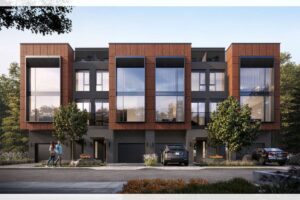
Recent Ontario housing trends show clear demand shifts:
-
Over 60% of first-time buyers in the GTA prioritize low-rise housing over condos (industry surveys from TRREB-aligned reports)
-
Suburban freehold/townhome demand has increased steadily since 2021 due to remote and hybrid work adoption
-
Condo maintenance fees in many GTA buildings now exceed $700–$1,200/month, pushing buyers toward lower monthly fixed costs
POTL homes sit in a “sweet spot”:
-
Lower monthly fees than condos
-
Less maintenance responsibility than freeholds
-
More affordability than detached homes
Downsides of POTL Townhomes (Important)
POTL isn’t perfect, and buyers often miss key risks:
1. Ongoing Monthly Fees
Even though it looks like freehold, you still have mandatory fees.
2. Fee Increases
Because there’s no large condo reserve fund structure, increases can happen if infrastructure costs rise.
3. Limited Transparency
Some buyers don’t fully review:
-
Shared service contracts
-
Long-term road maintenance plans
-
Reserve fund planning for infrastructure
4. Resale Confusion
Many buyers don’t understand POTL, which can slightly reduce demand compared to standard freehold homes.
Are POTL Townhomes a Good Investment?
POTL homes can perform well in the GTA because:
-
Low-rise supply remains tight due to zoning restrictions
-
Population growth continues in suburban Ontario (GTA added over 500,000+ residents in recent census periods)
-
Families are prioritizing space over amenities
However, performance depends heavily on:
-
Location (Durham, Peel, York outperform smaller markets)
-
School districts
-
Builder quality
They are generally considered:
-
Better than condos for long-term livability
-
Comparable to freehold in appreciation in strong suburbs
-
Less predictable due to fee structure differences
Key Takeaway
A POTL townhome is essentially a hybrid ownership model that gives you freehold-style living with shared maintenance costs.
It’s becoming more common in Ontario because it solves a development problem: how to build low-rise housing without pushing prices into detached-home territory.
For buyers, the key question is not just “what is it?” but:
-
Do you understand the fees?
-
Do you understand long-term obligations?
-
Does it fit your lifestyle better than a condo or detached home?