

What’s Happening?
For years, smaller homes and compact urban units were treated as the “default” entry point into the housing market. They were marketed as affordable, efficient, and ideal for first-time buyers. That logic is weakening in many parts of Ontario and the GTA.
The shift isn’t emotional or aesthetic. It is structural. Affordability pressures, lifestyle changes, and long-term financial trade-offs are pushing buyers to reconsider what “starter home” actually means.
Affordability pressures changed the equation
The idea that smaller homes are automatically cheaper no longer holds in many markets.
According to the Bank of Canada, higher interest rates over the past several years have significantly reduced borrowing capacity for households. Even when purchase prices adjust, monthly carrying costs often remain high because financing costs dominate total affordability.
At the same time, wages have not kept pace with housing costs. According to Statistics Canada, shelter costs have been one of the largest contributors to inflation pressure in recent years, meaning households are paying a higher share of income toward housing than in previous cycles.
Result:
- Buyers are no longer choosing between “small vs large home”
- They are choosing between “shared ownership vs individual affordability”
This is one reason multi-buyer and multi-generational purchases are increasing, even when the target is a larger home rather than a smaller one.
The “small home = affordability” assumption is breaking down
A key misconception in the market is that smaller automatically means more affordable long-term.
In reality, buyers now evaluate:
- monthly mortgage cost
- maintenance fees (if applicable)
- utility costs per square foot
- renovation limitations
- resale demand
Smaller homes often fail on flexibility. They can be cheaper upfront, but they restrict future needs like:
- working from home
- expanding families
- aging parents moving in
- rental income potential
This creates a long-term trade-off that many buyers are no longer willing to accept.
Space demand has structurally increased
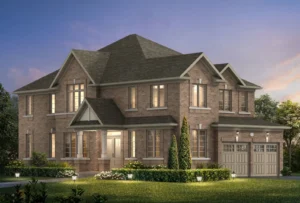
Lifestyle expectations have changed more permanently than most buyers realize.
Remote and hybrid work normalized the need for dedicated space inside the home. What used to be optional (home office, extra bedroom, basement living area) is now often essential.
Research from Royal LePage and RE/MAX has consistently shown that buyers now prioritize:
- more interior square footage
- separate work areas
- outdoor space
- flexible floor plans
This is especially true in the GTA, where commuting patterns are less dominant than they were pre-2020.
Smaller homes struggle to meet these requirements without significant compromise.
Demographics are shifting toward larger households
Another factor driving demand away from smaller homes is household structure.
According to Statistics Canada, multigenerational households have grown significantly over the last two decades, increasing much faster than overall household formation.
This matters because:
- more adults per household increases space requirements
- caregiving responsibilities require separate living areas
- shared ownership becomes a financial strategy, not just a cultural one
Smaller homes simply cannot efficiently support these arrangements without reducing privacy and usability.
Buyers are thinking longer term, not just entry price
The biggest psychological shift is time horizon.
Earlier buyer behavior focused on:
- “get in the market”
- “upgrade later”
Now buyers are asking:
- “How long can I actually stay in this home?”
- “Will this still work in 5-10 years?”
Smaller homes often fail this test because they require an upgrade sooner, which means:
- transaction costs
- moving costs
- market timing risk
- refinancing exposure
As a result, many buyers prefer to stretch initially into a more flexible home rather than move twice.
Freehold homes benefit from functional demand
Detached and freehold homes continue to attract stronger end-user demand because they offer:
- land ownership
- expansion flexibility
- rental suite potential
- long-term adaptability
According to the Canadian Real Estate Association, constrained supply in low-rise housing segments continues to support pricing stability in many regions, particularly where population growth remains strong.
This doesn’t mean condos or smaller homes lose all relevance. It means they are no longer the default preference for many serious long-term buyers.
Final takeaway
Smaller homes are not disappearing from the market, but their role is changing.
They are no longer automatically seen as the first or best step. Instead, buyers are increasingly weighing long-term usability, flexibility, and household structure over initial entry price alone.
In many cases, that leads them toward larger homes that better support how people actually live today, not how the market used to function a decade ago.
Explore Pre-Construction Projects
Browse condos and homes now selling and coming soon across Ontario.